THEPS Newsletter #14: Better dissemination of results = a serious organisation
Your weekly guide to writing better EU projects!
Hello,
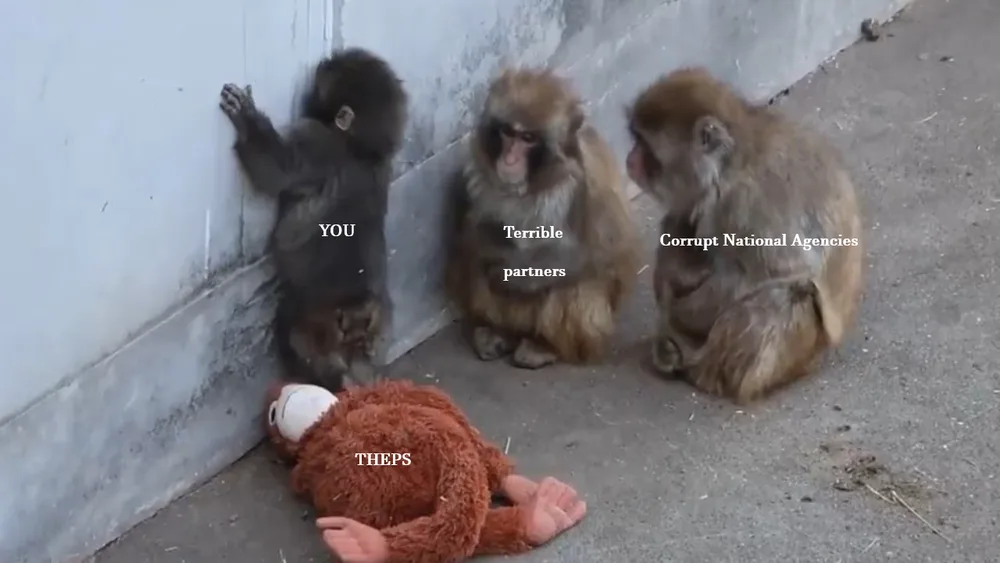
A few weeks ago, we told you about Panchi-san - the Internet’s symbol of hope in the loneliest of times. Our monkey boy has a friend!
We are your friends in times of desperation. We bring the data, the opportunities, the humour! Because work should be what? FUN!
Have some free time to write a new project? We got you (funding opportunities). Have you trained exceptional people in LTTAs? We got you (nominate them for the awards we mentioned). Have you worked with terrible partners? We got you (soon we’ll tell you more!). Open to new learning opportunities for you, your friends, and your trainees? We got you (we have a new section)! Need disseminate your outputs better? We got you (check the Tips & Tricks section).
We have a fun little issue to have your cup of EUspresso with. Ok, sometimes our puns are terrible… but this issue isn't:
- URBACT IV
- Connecting the Dots
- Learning Opportunities
- Quick News
- How to seriously disseminate…
- What the Future Holds

URBACT IV
We have some municipalities that have signed up for this newsletter! Hey, towns and cities, we see you. Or maybe, you’re an NGO that works closely with your municipality? Let URBACT enter the chat!
URBACT is the EU’s programme that helps towns and cities steal each other’s best ideas. Officially, they call it “exchange of good practices”, but let’s be honest: it’s structured, EU‑funded, policy‑approved copying. And it works beautifully. URBACT creates Action Planning Networks, which are groups of cities that team up for two years to solve a shared urban problem. Think of it as:
- “What if we redesigned our public spaces?”
- “How do we stop our city centre from becoming a ghost town?”
- “Can we make mobility less… chaotic?”
And then you find 8-10 other places asking the same question, and boom! You’re in a European think‑tank with travel money.
What You Get
- New friends! And...
- EU‑funded travel to meet partner cities,
- expert support (actual urban specialists, not your cousin who once watched a documentary about Copenhagen),
- workshops, study visits, and peer learning,
- a Local Action Plan you can proudly show your mayor,
- a legitimate excuse to say “I’m going on a mission to Portugal for work”.
And yes, it’s all covered by the programme. Your accountant will be thrilled.
Who Can Join?
- Cities
- Towns
- Municipalities
- Local authorities of all sizes
URBACT is the EU’s most democratic playground. Honestly.
Deadline: 17 June 2026
Plenty of time to find partners, shape an idea, and convince your mayor that “networking in Barcelona” is essential. ¡Chin chin!
Learn more at urbact.eu.
Connecting the Dots
Eurodad (yes, that’s a real name…the European Network on Debt and Development) has opened Round Two of its Connecting the Dots grants, and it’s basically a call for organisations that want to make the world a little fairer (and have the receipts to prove it). If your team works on tax justice, debt justice, climate finance, or global inequality, this is your moment to shine and get funded for it.
These grants support civil society organisations doing bold advocacy, sharp research, and clever campaigning. Think of it as the EU saying: “Please keep fighting the good fight and here’s some money to help.”
Apply here.
Learning Opportunities:
Gender & Transportation
(UN Women Training Centre)

Ever wondered why some bus stops feel safe while others feel like the opening scene of a US horror movie? Or why transport planning often forgets that people carry groceries, push strollers, or travel at night?
UN Women’s “Gender and Transportation” online course dives into exactly that. This self‑paced training explores how transportation systems can be designed to be safer, fairer, and more accessible for everyone. It covers real‑world case studies, practical tools, and the kind of insights that make you look at your daily commute in a completely new way.
What you’ll learn:
- How gender shapes mobility patterns.
- Why transportation planning often overlooks women’s needs.
- What inclusive, safe, and equitable mobility actually looks like.
- How to integrate gender perspectives into urban planning and policy.
This is perfect for:
- Urban planners,
- municipalities,
- NGOs working on inclusion, mobility, or safety, and
- anyone who wants to understand how cities can work better for everyone.
Format:
- Online
- Self‑paced
- Free (yes, really)
Start learning here.
Quick News
One: EU leaders have agreed to open accession negotiations with Ukraine and Moldova, marking one of the most significant enlargement steps in years. While full membership is still a long road, this decision signals a clear political commitment to bring both countries closer to the EU family.
For programmes like Erasmus+, Creative Europe, Horizon Europe, and CERV, this is big news. Ukraine and Moldova already participate in several EU programmes as partner or associated countries, but accession talks open the door to deeper integration, easier mobility, and stronger funding access. In practical terms, this could mean more student exchanges, more youth projects, more cultural cooperation, and smoother participation rules over the coming years.
Two: The European Committee of the Regions has officially announced EuroPCom 2026, Europe’s largest annual gathering of public communication professionals. The conference will take place 9-10 June 2026 in Brussels, bringing together EU institutions, local authorities, communicators, researchers, and civil society.
This year’s theme is “Be connectors: creating proximity in a fragmented world” and it focuses on how communicators can rebuild trust, strengthen dialogue, and create meaningful connections at a time when information spreads instantly but public confidence often lags. It’s a major moment for anyone working on EU‑funded projects, citizen engagement, or community outreach.
For you, dear THEPS readers, this is a prime opportunity to learn, network, and bring back fresh ideas for communicating Erasmus+, Creative Europe, CERV, and local EU initiatives.
Learn more here.
Tips & Tricks
If your EU project produces anything (reports, datasets, software, policy briefs, training materials, even posters), Zenodo is where it should live. It’s free, permanent, citable, and built exactly for the kind of open‑science requirements that Horizon Europe and other EU programmes demand.
Zenodo was launched in 2013 by CERN within the OpenAIRE project to give EU‑funded researchers a place to store and share their outputs when they didn’t have an institutional repository. It was named after Zenodotus, the first librarian of the Library of Alexandria - fitting for a platform built to preserve knowledge. It quickly became a global hit because it accepts all disciplines and all types of research artefacts, from papers to datasets to software.
Zenodo is now home to the EU Open Research Repository, a dedicated space for Horizon Europe and earlier Framework
Programme projects. It helps projects:
- Meet open access and open data requirements.
- Store publications, datasets, and software.
- Create project communities where all outputs are grouped.
- Ensure long‑term preservation and discoverability.
- Automatically generate DOIs for every upload (so your work is citable forever).
This makes Zenodo not just useful but essential for compliance, visibility, and impact. If your EU project isn’t using Zenodo, you’re missing out on:
- A trusted, EU‑backed repository
- Free long‑term storage
- Instant DOIs
- A clean way to showcase all project outputs in one place
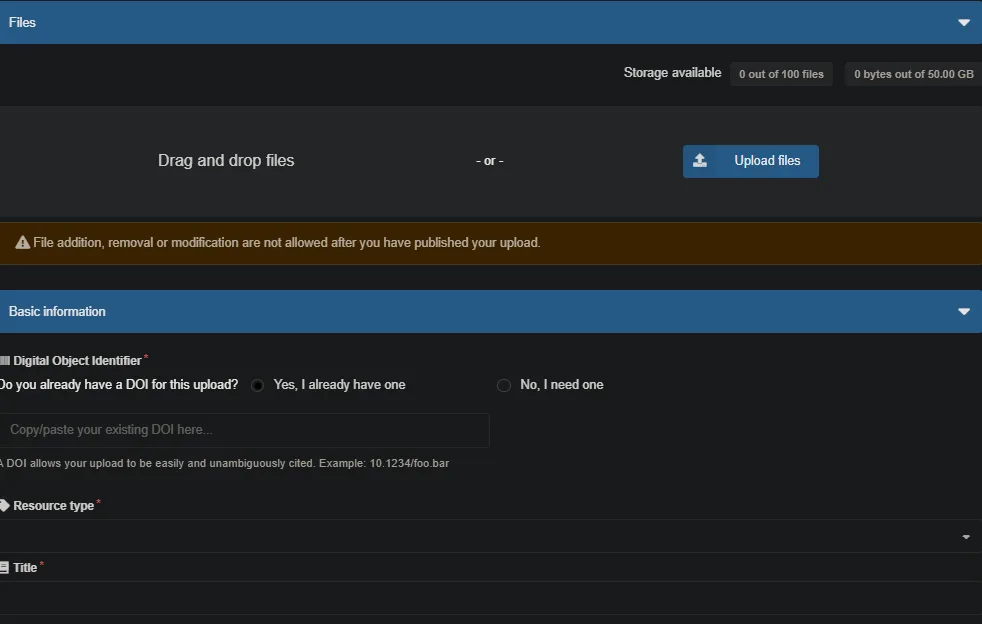
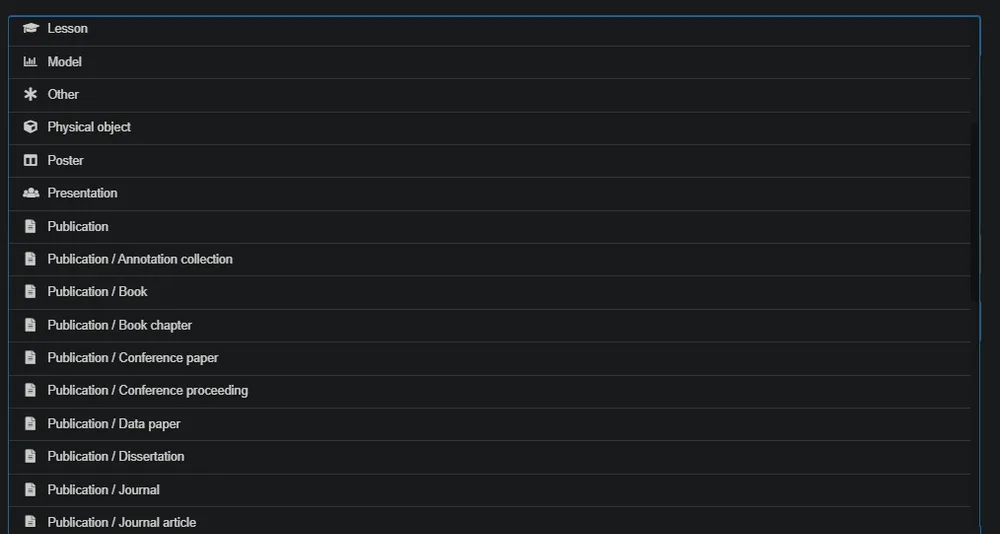
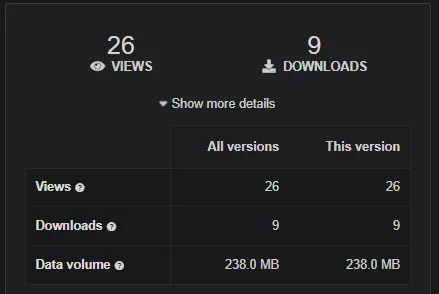
It’s one of the simplest tools that can dramatically improve your project’s transparency, credibility, and legacy. Look how simple things look:


What the Future Holds
Everyone uses Europe, and Europe is in danger. Vote. Educate.
Follow us on LinkedIn (and soon on European-based social media!).