THEPS Newsletter #10: We are all Punch!
Your weekly guide to writing better EU projects!
Hello,
Last week, the 6-month-old monkey Panchi-kun at Ichikawa City Zoo in Japan melted everyone’s hearts when his mother left him, making him a lonely baby. He spent time with an orangutan plush toy for emotional support.
At THEPS, we feel like Punch (his English name) 90% of the time. So many fellow organisations surround us, but they are either extremely unprofessional, very busy or quite illogical. And then there’s you - our emotional support plush orangutan toy, who wants to live in a better, more compassionate and educated Europe. Or are we your plushy? Yes, we are!
This week:
- HORIZON‑CL6‑2026‑01‑BIODIV‑03‑two‑stage
- The Single Market Programme
- Quick News
- Statistical Data from Italy
- Tips & Tricks
- What the Future Holds
Two Funding Opportunities
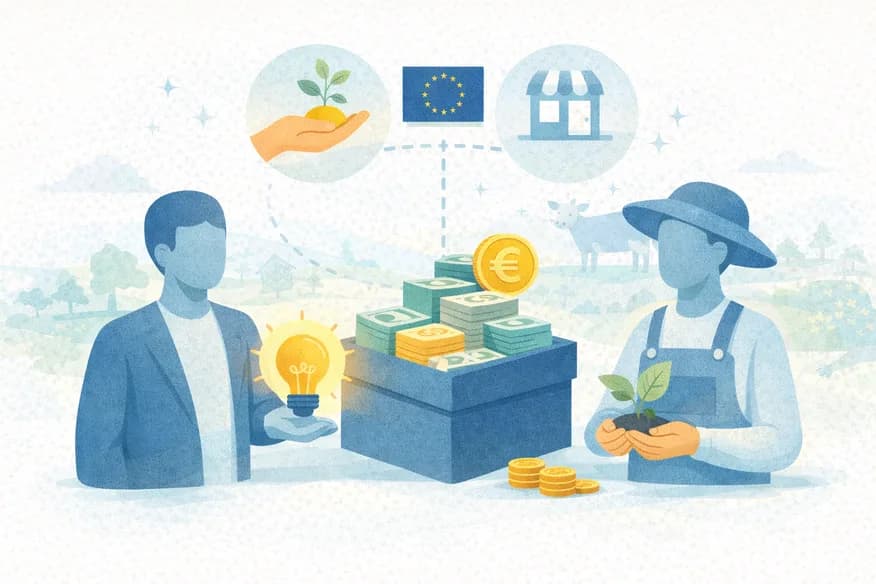
Funding Opportunity One: HORIZON‑CL6‑2026‑01‑BIODIV‑03‑two‑stage
This Horizon Europe topic sits under Cluster 6: Food, Bioeconomy, Natural Resources, Agriculture and Environment, and specifically under the Biodiversity destination. It is a two‑stage call, meaning applicants first submit a short proposal; only selected consortia are invited to submit a full proposal.
This topic focuses on mobilising citizens to protect and restore nature. The goal is to develop innovative, scalable, community‑driven approaches that contribute to EU biodiversity objectives, including the EU Biodiversity Strategy for 2030 and the Nature Restoration Regulation.
According to Horizon Europe NCP and matchmaking sources, the topic aims to support projects that:
- engage citizens directly in monitoring, restoring, or managing biodiversity
- develop toolkits, methods, and digital solutions for citizen‑driven conservation
- test local restoration actions with strong community involvement
- address issues such as invasive species, pollinators, freshwater fauna, or habitat restoration
- contribute to EU‑level biodiversity knowledge and policy frameworks
As with all Horizon Europe Research and Innovation Action calls, eligible applicants include:
- Universities and research institutes
- Public authorities (municipalities, regions, environmental agencies)
- NGOs and civil‑society organisations
- SMEs and companies working in environmental innovation
- Citizen‑science organisations and networks
- International consortia (minimum 3 entities from 3 EU/Associated Countries)
This topic is particularly suitable for organisations experienced in:
- biodiversity monitoring
- community engagement
- environmental education
- nature restoration
- digital tools for citizen science
The draft 2026 Work Programme lists the budget for the BIODIV‑03 topic as:
- €18 million total, with
- around €9 million per project,
- 2 projects expected to be funded
This usually means the EU typically funds 100% of eligible costs.
Your projects must:
- demonstrate strong citizen involvement, not just consultation
- include real‑world demonstration sites (like local restoration actions)
- contribute to EU biodiversity monitoring and restoration frameworks
- align with the EU Biodiversity Strategy for 2030 and Green Deal priorities
- produce scalable, replicable solutions
- involve multiple stakeholder types (citizens, NGOs, authorities, researchers)
Based on the 2026 Cluster 6 calendar:
- Opening date: 17 April 2026
- Stage 1 deadline: 17 September 2026 (two‑stage call)
- Stage 2 deadline: typically ~5 months after stage 1 (to be confirmed in the official call text)
We know this call is far away, but it’s a solid opportunity for funding and finding excellent partners takes time. Don’t miss your chance!
Funding Opportunity Two: The Single Market Programme (SMP) has opened the 2026 call for Erasmus for Young Entrepreneurs (EYE). This is the EU’s long‑running cross‑border exchange scheme that helps aspiring entrepreneurs learn from experienced business owners in another European country.
This call funds the intermediary organisations (IOs) that run the programme and not the entrepreneurs themselves. These IOs form the backbone of EYE: they recruit participants, match them, support exchanges, and ensure quality. Funded organisations will:
- recruit new and host entrepreneurs
- provide training, mentoring, and support
- manage cross‑border exchanges
- build partnerships with business networks
- promote the programme at the regional, national, and EU level
- ensure high‑quality matching and monitoring
In short, the EU funds you to run the programme, not to send your own entrepreneurs.
The call provides funding for multiple consortia, each receiving €500,000 – €1,000,000 per project (typical range), and the funding rate is 90% of the eligible costs.
The total call budget is usually around €40–50 million, though the exact figure for 2026 will be confirmed in the final call text.
Your project must:
- run for 36 months
- include at least 5 partners from different eligible countries
- demonstrate strong experience in entrepreneurship support
- commit to recruiting a minimum number of entrepreneurs
- ensure high‑quality matching and monitoring
- participate in EU‑level coordination activities
Not eligible:
- individual entrepreneurs
- purely academic research projects
- organisations without SME‑support experience (!)
Deadline: 21 May 2026, 17:00 Brussels time
This is a single‑stage call.
QUICK NEWS
One: The EU’s local and regional leaders will meet in Brussels for the 170th Plenary Session of the European Committee of the Regions on 3-4 March. This is basically the EU’s giant family meeting for mayors, governors, and regional reps. They will debate how to keep cohesion funding strong, how regions can actually deliver the Green Deal, and how local authorities can survive the digital transition without losing their minds (or their budgets).
This meeting is very important for all NGOs and people who want simplified rules for funding and growth. So many EU programmes (especially Erasmus+, CERV, Creative Europe, Horizon Europe, LIFE, Interreg) depend on local and regional authorities to make projects happen. When regions push for simpler rules, stronger funding, and more support, it directly affects:
- how easy it is to run EU projects
- how much funding flows to local communities
- how quickly new EU priorities (green, digital, social) turn into real opportunities
In short, when regions speak up in Brussels, your future projects get shaped.
Statistical Data from Italy

Did you know that one of the most funded types of projects in Romania is the KA210-VET? In March 2025, of the 42 submitted projects, 13 were funded, which is 31%!
We'll publish a comprehensive report on the funding rates for the Erasmus+ programme in 2024 and 2025 very soon. It will help you understand where it's worth submitting and where it's not.
Tips & Tricks
Keep. It. Simple.
Writing a project proposal isn’t a language exam, and it’s definitely not the moment to show off your highest Common European Framework of Reference for Languages level. Keep your sentences short, skip the fancy adjectives (or use very few), and aim for simple, clear English, around B2 level at most.
What the Future Holds
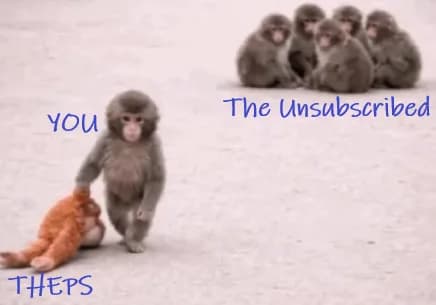
Punch is better now. He had an adult macaque who groomed him, and he was even part of the gang. Then some of the other monkeys attacked him. It will take time.
You’re part of our gang! It’ll take time to be more united, but we’re getting there!
Please help us grow. Follow us on LinkedIn.