THEPS Newsletter #9: Different Funding Opportunities and Ideas How to Make Your Organisation More European
Your weekly guide to writing better EU projects!
Hello,
Stressful times, innit? Did you manage to submit your project proposals on Thursday? Well done! The next Erasmus+ deadline approaches; hopefully, you’ve advanced with your writing or maybe even submitted some projects!
We won’t lie to you, we’ve submitted a few, we’re happy with the partnerships and the objectives we want to achieve.
Issue #9 brings opportunities for bigger organisations and small organisations. And some for your target groups. We also have suggestions on how to make your organisation more European.
This week:
- Two Funding Opportunities
- Quick News
- Statistical Data from Italy
- Tips & Tricks
- What the Future Holds
Two Funding Opportunities
Funding Opportunity One: Innovation Fund 2025
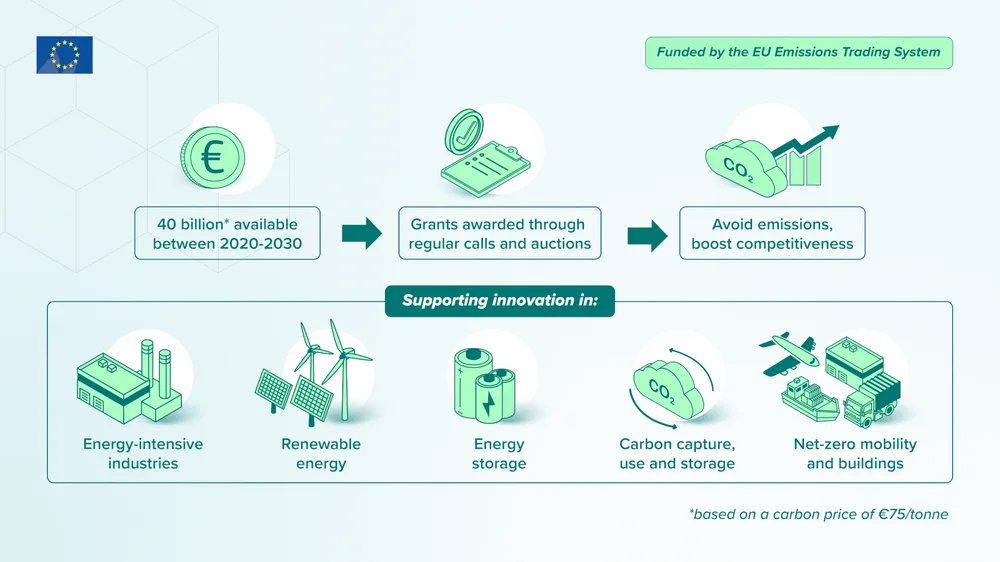
The Innovation Fund is one of the world’s largest funding programmes for net‑zero technologies, supporting breakthrough solutions that can decarbonise European industry at scale. Yup. Big words. We know. But we care about the nature in the EU (on that, a bit later).
The new calls are now open, with more than €5 billion available across several funding windows. You read that right. 5 billion.
The eligible applicants include:
- Private companies (large industry, SMEs, startups)
- Public bodies
- Research organisations
- Consortia of multiple partners
The key requirement is that the project must be implemented within the EU or EEA and must demonstrate high innovation and significant GHG‑reduction potential.
The restrictions include:
- Your projects must be highly innovative, incremental improvements are not eligible.
- Your projects must be commercial‑scale, not purely research‑focused.
- Certain fuel production based on non‑recycled feedstocks is explicitly ineligible.
The first deadline is 23 April 2026, 17:00 CEST. Read more about it here.
Funding Opportunity Two: Falling Walls Lab Leuven 2026
Now, if the above call wasn’t your cup of tea, worry not, here’s a lovely local opportunity, but actually not! The Falling Walls Lab is an international competition where students, researchers, and early‑career innovators pitch a breakthrough idea in just 3 minutes. The Leuven edition is the first Lab of the 2026 season, and applications are now open.
We’ve all had events with amazing youth, maybe they can apply? This is a great opportunity for young scientists, innovators, and creative thinkers to gain visibility, join a global network, and potentially qualify for the Global Finale in Berlin.
Falling Walls Lab accepts any breakthrough idea that can “break a wall” in science, society, or technology. Examples include:
- scientific research breakthroughs
- social innovation concepts
- technological prototypes
- sustainability and climate solutions
- medical or health innovations
- digital, AI, or engineering ideas
The key requirement: Their idea must be innovative, impactful, and explainable in 3 minutes. Eligible applicants include:
- Students (BA, MA, PhD)
- Early‑career professionals (18+)
- Researchers from any discipline
- Entrepreneurs and innovators
Academic requirements, one of the following:
- currently enrolled in a university degree programme
- hold a bachelor’s degree or higher
- be an early‑career professional with a strong innovation track
The applications must be submitted in English by 17 February 2026 here.
QUICK NEWS
One: Have you been part of an Erasmus+ or Horizon project related to food? We have!
Nominations are now open for the World Food Prize, one of the most prestigious international awards recognising individuals who have made exceptional contributions to improving the quality, quantity, or availability of food worldwide. Often described as the “Nobel Prize for Food and Agriculture,” the award celebrates breakthroughs that advance food security, sustainability, nutrition, and agricultural innovation.
The Prize is particularly relevant for researchers, innovators, and organisations working in agri‑tech, climate‑smart agriculture, food systems transformation, biotechnology, nutrition, and rural development, basically all areas strongly aligned with EU priorities under Horizon Europe, the Green Deal, and global development programmes.
Who Can Be Nominated?
The Prize accepts nominations for:
- scientists and researchers
- innovators and entrepreneurs
- policymakers and practitioners
- leaders in agriculture, food systems, or nutrition
- individuals whose work has had a global, scalable impact
Self‑nominations are not allowed, the candidates must be nominated by another individual or organisation. So, if there is someone in your community (a person from an organisation, a scientist, someone you’ve worked with from a university) who has made a beautiful change, nominate them!
What Kind of Work Is Recognised?
The World Food Prize honours achievements such as:
- breakthroughs in crop science or biotechnology
- innovations in sustainable agriculture
- advances in nutrition and food safety
- climate‑resilient farming solutions
- policies improving food access and equity
- technologies that reduce hunger or malnutrition
In short: any contribution that significantly strengthens global food security.
Award Amount
The laureate receives a $250,000 prize, along with global recognition and participation in the annual Borlaug Dialogue in Des Moines, USA.
The deadline is 1 May. Learn more here.
Two: More awards! The EU Organic Awards 2026 are officially open for applications, celebrating outstanding achievements across Europe’s organic value chain. Organised jointly by the European Commission, the European Parliament, the Council, the European Economic and Social Committee, and the European Committee of the Regions, the awards highlight excellence in organic farming, food production, retail, and community initiatives.
These awards are part of the EU’s broader ambition to expand organic production, strengthen sustainable food systems, and support the goals of the Farm to Fork Strategy.
Award Categories
The 2026 edition includes eight awards across four main groups:
Group 1. Best Organic Farmers (2 awards)
- One female farmer
- One male farmer
Group 2. Best Organic Region / City / Bio‑District (3 awards)
- Best Organic Region
- Best Organic City
- Best Organic Bio‑District
Group 3. Best Organic SMEs (3 awards)
- Best Organic Food Processing SME
- Best Organic Retailer
- Best Organic Restaurant / Food Service
These categories celebrate innovation, sustainability, circularity, and community impact.
Who Can Apply?
Eligible applicants include:
- Farmers
- SMEs in processing, retail, or food services
- Municipalities, regions, and bio‑districts
- Organisations promoting organic production
The applicants must be based in the EU and demonstrate a strong commitment to organic principles.
What the Jury Looks For
According to the Committee of the Regions, winning projects typically show:
- environmental sustainability
- innovation and replicability
- social impact
- contribution to EU organic targets
- economic viability
Deadline: 12 May 2026
Statistical Data from Italy
Sometimes, it’s very difficult to break through a certain strand. In March 2025, 138 projects were submitted for KA210-VET, but 34 (or 25%) were funded. Also, the lowest funded score was 93 points. In other words, there was no place for mistakes when you apply in Italy.
We'll publish a comprehensive report on the funding rates for the Erasmus+ programme in 2024 and 2025 very soon. It will help you understand where it's worth submitting and where it's not.
Tips & Tricks
Technically, not a tip or trick for better project writing, but for a stronger EU. If we spend our money on European products, the investment stays local. Then it's used for better culture support, better nature support, and better EU.
Hear us out. Get rid of foreign-owned communication tools. It’s a step-by-step process, but we must act now. Here is what we have done at our offices:
Browser: vivaldi. Based in Norway. It takes a few minutes to download and install. Then you can download your bookmarks from your foreign-owned browser and install them with one click.
Instead of Instagram and TikTok: monnett. Based in Belgium.
Instead of X: W. Based in Sweden.
So, use these for the dissemination of your project results! More European, less control, fewer algorithmic schemes that are killing our communities!
What the Future Holds
We know that this issue has a lot of information. Maybe a lot of it wasn’t suitable for your organisation, and this is fine. Sometimes we need to know that there are opportunities for others and they can grow with us. And we can grow with them. We’re changing the world together.
After the madness from the March 2026 deadlines, at THEPS we will focus on three things:
One: AgoraEU
Two: The Big THEPS Survey
Three: A huge report on the funded projects for 2024 and 2025. You’d be shocked (we cannot express it otherwise).
Please help us grow. Follow us on LinkedIn.