THEPS Newsletter #4
Your weekly guide to writing better EU projects!
Hello again,
It’s only the beginning of 2026, and we’re already energised. The March call is approaching. Have your ideas started shaping a project yet? If not, don’t panic. If yes, even better. Either way, this is the moment to write something meaningful.
At THEPS, we believe in a few simple truths:
- Projects should be funded because they genuinely help people.
- Organisations that do real, quality work should unite, not compete in silence.
- And yes, National Agencies must be abolished. It’s not controversial. Corruption and gatekeeping have no place in European cooperation. We said it. We’ll keep saying it. And we’ll push toward it.
But until the revolution arrives, let’s focus on the smaller, steady acts of growth that move us forward:
- European Universities Initiative (Erasmus+ 2025)
- Quick News
- Statistical Data from Sweden
- Tips & Tricks
- What the Future Holds
European Universities Initiative 2026
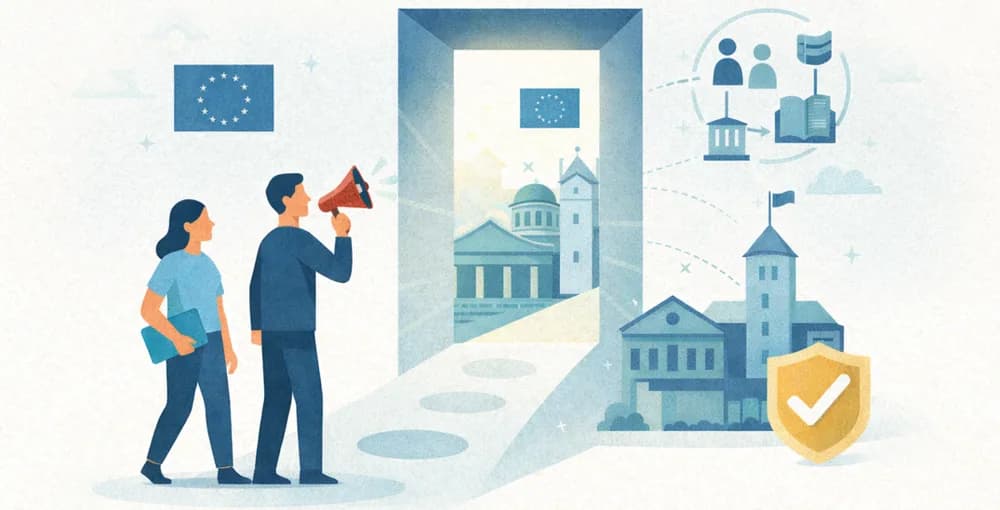
If you haven’t seen it yet, the European Universities Initiative call is open. It’s one of the most ambitious Erasmus+ actions. It’s complex, competitive, but transformative for those who get in.
A project should consist of a minimum of three EU Member States, with typically 6 to 10 universities. Each alliance can receive up to €14.4 million for 4 years, but the funding rate is 80% (meaning, co‑financing is required).
Eligible participants include Higher Education Institutions (HEIs) from EU Member States and HEIs from Erasmus+ associated countries (Norway, Iceland, Western Balkans, Türkiye, Georgia, etc.). Non‑academic partners are optional but encouraged! They include research institutes, public authorities, NGOs, companies and cultural institutions. But be careful with your application! The coordinator must be an HEI!
The deadline is 4 March 2026, 17:00 CET. Good luck!
Quick News
One: As of January 1, Moldova is officially part of the Creative Europe countries. This means that you can now have Moldova as either your country of residence or destination when applying for a grant. How amazing is that!
Two: We must pay attention to the EU unemployment rates because they can inform our decision-making process when working with specific target groups. Fresh Eurostat data shows that EU unemployment remained at 6.0% in October 2025, while the Euro area rate stood at 6.4% (Euro area = the Euro is the currency). Compared to September 2025, unemployment rose by 32,000 in the EU but fell by 13,000 in the euro area.
Some interesting target groups:
- Youth unemployment (under 25) - 15.1% in November 2025, slightly down from the previous month.
- Ukrainian refugees: 153,000 women aged 25 and over, and 73,000 men aged 25 and over, were unemployed. Additionally, 40,000 people under the age of 25 were registered as unemployed.
Have you planned the inclusion of these target groups?
Statistical Data from Sweden
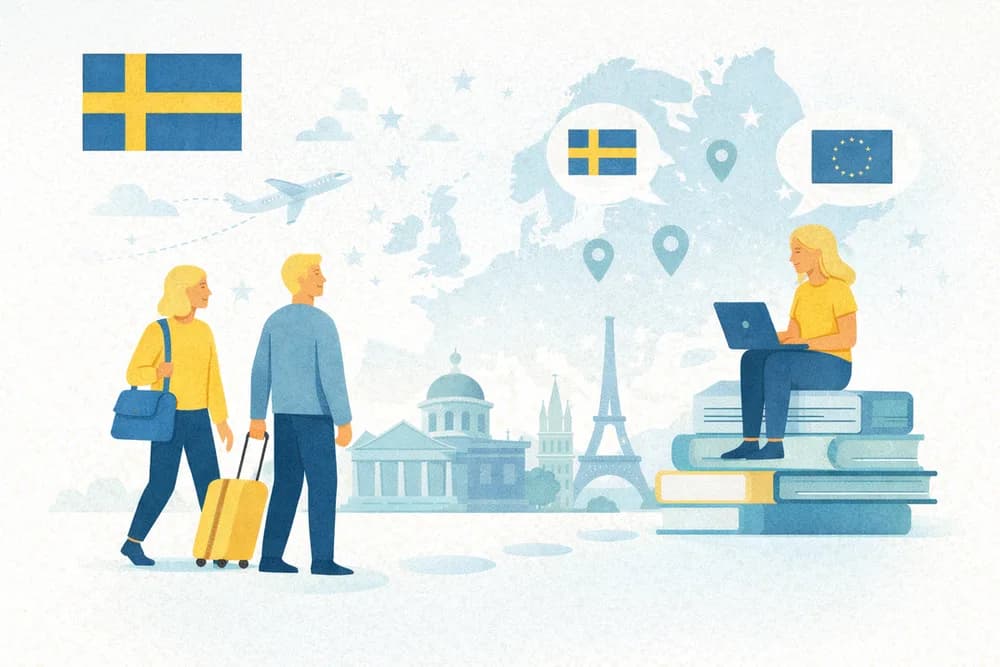
Did you enjoy our music recommendation in the last issue? All that we want is a beautiful life, and Sweden is here to teach us all how to achieve that! What a happy nation!
Sweden has one of the highest youth participation rates in non‑formal education in the EU. It is a major participant in Erasmus+ Youth Exchanges and KA154 Youth Participation projects.
Sweden’s official statistics agency (SCB) published updated mobility data in October 2025.
Incoming students to Sweden (2024/25 academic year)
- 39,000+ international students studied in Sweden.
- The majority came from Europe and Asia.
- Strong growth in students from EU/EEA countries.
Outgoing Swedish students (2024/25)
- Over 25,000 Swedish students studied abroad.
- Most popular destinations: UK, USA, Denmark, Spain, Germany.
Exchange students (Erasmus+ included)
- Sweden hosted ~17,000 exchange students.
- Sweden sent ~14,000 exchange students abroad.
It isn’t surprising that nearly 50% of young adults (25-34) hold a higher‑education degree - studying and travelling in the EU is amazing. Vackert liv!
Tips & Tricks
We have a very “simple but noticeable” tip for you this week.
Let’s be honest, most of us use ChatGPT when drafting projects. But AI has its own favourite phrases and patterns, and they’re surprisingly easy to spot. One of the biggest giveaways? The word directly. It pops up everywhere in AI‑generated text, even though we almost never use it that often in real project proposals. And evaluators already know which groups you’ll reach directly and which indirectly because you literally explain this in a dedicated field.
So there’s no need to sprinkle directly into every single answer. It doesn’t make your proposal clearer. It just makes it sound… well, a bit too ChatGPT.
So, click that Ctrl+f / ⌘ Cmd+f and remove it where necessary. It also saves you a few precious characters in those tight text boxes.
What the Future Holds
Next week, we’ll tell you which country only funds 9% of the submitted KA210-SCH projects (shocking, we know…). Another country approves 70% of KA220-SCH! Stay tuned, we are only just beginning to share the exact statistical data with you! We’ll bring you more and more into the world of the Erasmus+ funding rates.
In the meantime, please follow us on LinkedIn: LinkedIn.