THEPS Newsletter #8: Big Money, Big Innovation, Big Opportunities
Your weekly guide to writing better EU projects!
Hello,
You know those popular memes about not being willing to receive emails, “I hope this email finds you…”?
Well, we hope this email finds you! We hope this email finds you and makes you happier! We cannot express how much we enjoy writing and sharing all of this info with you. We strongly believe that we need to be more united, it’s called the European Union, after all.
This week:
- European Defence Fund 2026 Call
- Quick News
- Statistical Data from Cyprus
- Tips & Tricks
- What the Future Holds
European Defence Fund 2026 Call
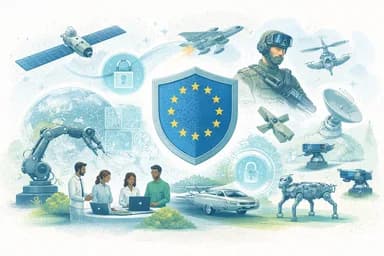
The European Defence Fund (EDF) has officially announced its 2026 call, and whether or not you usually follow defence‑related funding, this one deserves your attention. Why? Because it’s one of the largest, most innovative EU programmes, and it funds everything from cutting‑edge research to cross‑border industrial cooperation. Think of it as Horizon Europe’s tougher, more tactical cousin.
If your organisation works in technology, cybersecurity, materials science, AI, space, robotics, or advanced engineering, this is a funding wave you don’t want to miss. And we’re talking big money, baby! It’s a multi‑billion‑euro envelope (as is tradition for this programme), distributed across several thematic windows. Each topic has its own budget line, but overall, the EDF remains one of the EU’s most financially generous programmes.
The 2026 call focuses on strengthening Europe’s technological sovereignty and defence capabilities. This includes:
- Collaborative R&D between organisations in at least three EU Member States
- Next‑generation defence technologies
- Cybersecurity and cyber‑resilience systems
- Space‑based defence applications
- Advanced materials and manufacturing
- AI‑enabled defence solutions
- Sensors, drones, robotics, and autonomous systems
- Dual‑use technologies (civil + defence)
If your organisation has ever said, “We’re working on something innovative, but we need a serious budget,” this is your moment. Don’t be scared by the seriousness of the call, every idea counts! But to make sure, here’s who can apply:
- SMEs and tech companies
- Universities and research institutes
- Public bodies
- Industrial consortia
- Defence‑sector organisations
- High‑tech startups (yes, really)
Now, because the EDF funds dual‑use technologies, many organisations that don’t consider themselves “defence actors” are actually eligible. For example:
- Universities working on AI or robotics
- SMEs developing cybersecurity tools
- Research centres exploring materials science
- Space‑tech innovators
- Engineering departments
- Digital‑innovation hubs
And, quite importantly, the EDF is a cross‑border cooperation programme, which means it creates opportunities for partnerships, networks, and long‑term collaboration. We’ve told you a few times before, mix the types of partnership in your consortium!
Attention! There are three key moments that you must take into account:
- Your consortium must include at least three organisations from three different EU Member States
- The participants must be EU‑based and not controlled by non‑EU entities (unless strict conditions are met)
- The activities you have planned must align with EU security and defence interests
Unlike Erasmus+, where every NA does whatever it pleases, EDF doesn’t joke around.
Submissions open in May with a deadline late summer / early autumn 2026 (exact dates per topic). There will also be a two-day Networking Event on 10-11 March.
Read the full list of topics here.
Quick News
One: The EU has confirmed that the European Travel Information and Authorisation System (ETIAS) will begin operations in the last quarter of 2026. This means that British tourists, business travellers, and students planning short stays in Europe will soon need to factor in a new €20 travel authorisation fee for entry into 30 European countries.
This is important for us, as the Brits have rejoined the Erasmus+ programme. Out of the scope of our newsletter, know that US, Canadian, Australian, and Japanese travellers, as well as visitors from over 50 other countries, will also have to be authorised.
ETIAS is not a visa. It’s a quick, online pre‑travel authorisation designed to strengthen border security while keeping travel smooth for visa‑exempt visitors.
Learn more about it here.
Statistical Data from Cyprus

Projects for adult learners saw the following funding rates in Cyprus in March 2025:
KA220-ADU - 15 submitted, 4 funded (27%). 1 is for 400k, 3 are for 250k.
KA210-ADU - 27 submitted, 7 approved (24%). 4 are for 60k, 3 are for 30k.
Tips & Tricks
You are not going to like this, but it’s a genuine tip. Many stronger organisations have newsletters. Sign up for them. These newsletters give you an excellent idea of the work of a potential partner, give you an idea of what has been funded, and it’s also a wonderful way to support other people’s work.
Besides, reading a newsletter like that takes what? Ten minutes max. You can spare 10 minutes of your life learning instead of being spied on by foreign agent apps like that time-wasting one.
What the Future Holds
Tick-tock, time is ticking away. We hate the Erasmus+ platform, it’s one of the ugliest things ever produced by the Commission. We pay taxes for this barely functional platform. It’s a shame, really. Our point is that you are probably tired of all of the terrible design and horrible functionality. Why won’t these people make things nicer, easier?
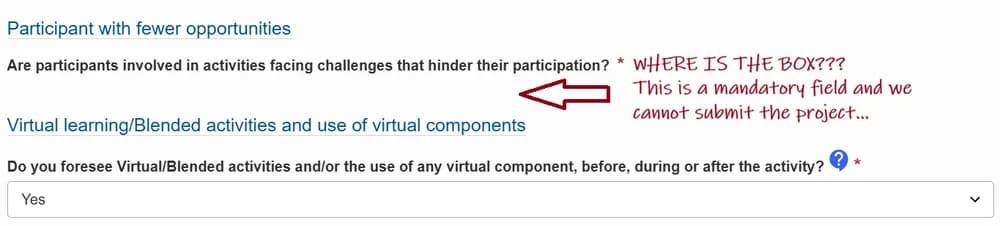
"Participant". One. Whatever.
We’ll figure out something. In the meantime, don’t stress much because there is less than a month left until the deadlines… (or a few days for some strands). Just finish one project and move on to the next one.
Follow us on LinkedIn, pretty please: LinkedIn.