THEPS Newsletter #28: More results!
Hello,
No one else does it as we do. We mean it - no one gives you this information!!!
We might send you a few extra issues in the coming weeks, along with a free analysis of the situation.
This issue offers:
- Some results from Cyprus, Czechia, Germany, Hungary, Slovakia, Slovenia
- What the Future Holds
Some results from Cyprus, Czechia, Germany, Hungary, Slovakia, Slovenia
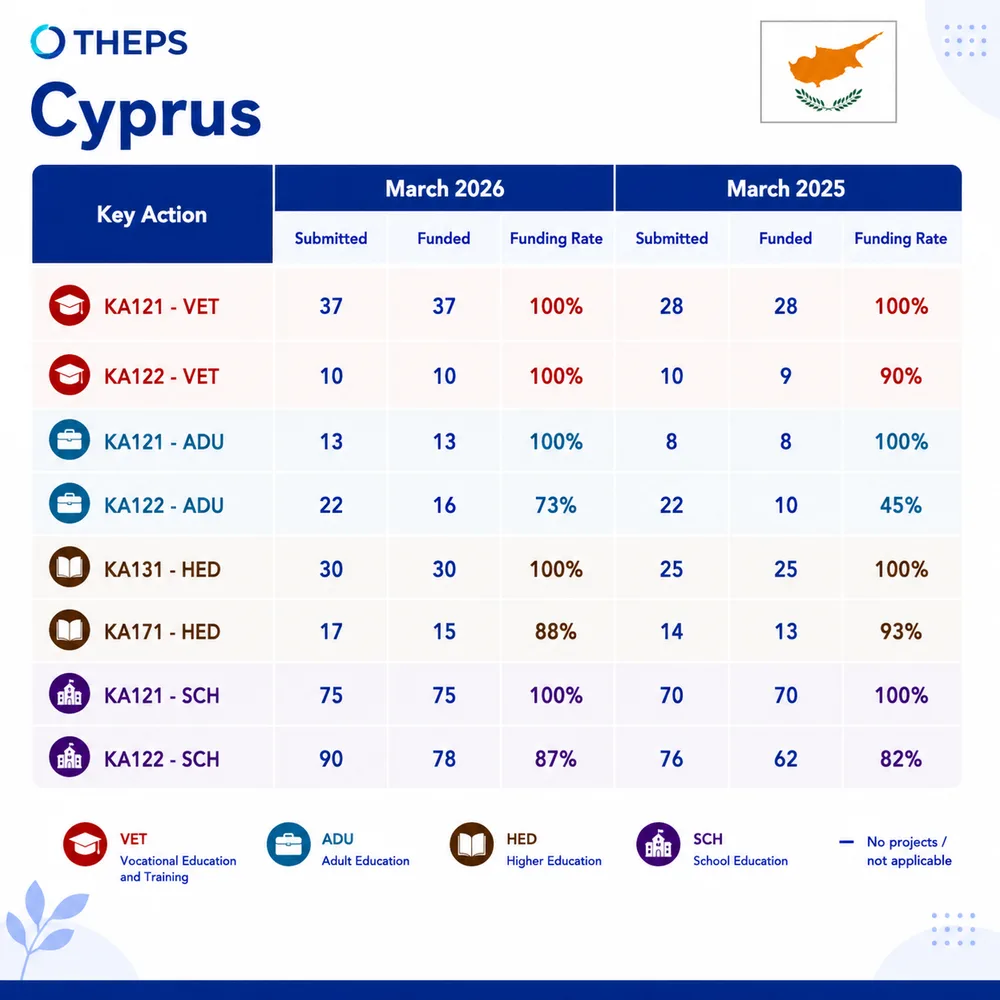
Overall, Cyprus combines relatively modest submission numbers with consistently high success rates, making it one of the most successful NAs in this comparison. In other words, submit your projects there.
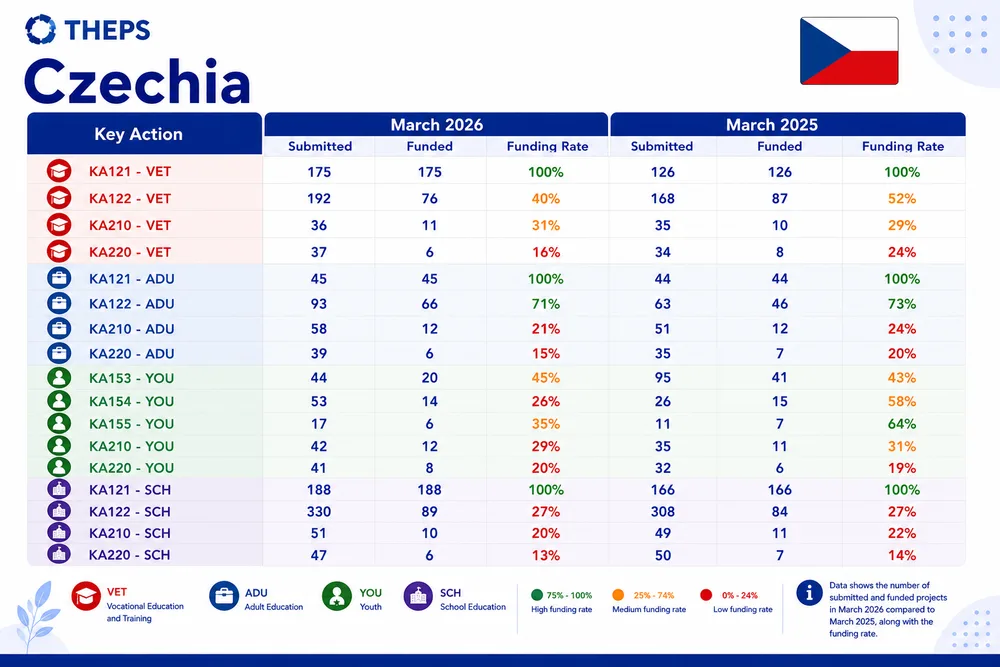
The КА220 are out!
In KA220-ADU, submissions increased from 35 to 39, but funded projects dropped slightly from 7 to 6. This pushed the funding rate down from 20% to 15%. So… more applicants entered the race, but fewer crossed the finish line.
KA220-YOU moved in the opposite direction: submissions rose from 32 to 41, funded projects increased from 6 to 8, and the funding rate improved slightly from 19% to 20%. Still, this remains highly competitive.
KA220-SCH stayed very difficult: submissions decreased from 50 to 47, funded projects slipped from 7 to 6, and the rate stayed almost unchanged, from 14% to 13%.
Overall, KA220 in Czechia is clearly not the “easy button” of Erasmus+. It attracts many applicants, but approval rates remain low. The message for everyone is simple: good ideas are not enough. KA220 needs strong partnerships, clear impact, and a proposal that survives a very crowded queue.
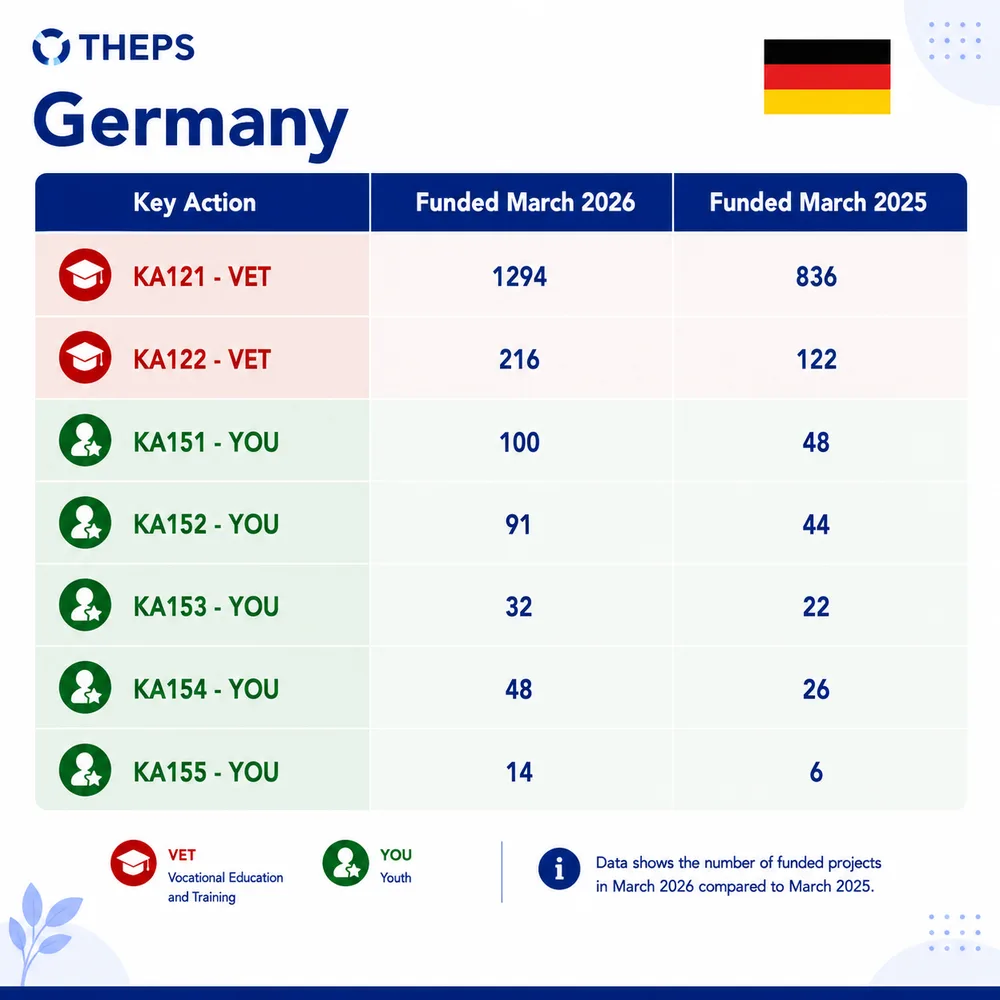
Overall, Germany funded 1,795 projects in March 2026, compared with 1,104 in March 2025, which is an increase of 691 projects, or approximately 63%. These figures suggest a substantial expansion of Erasmus+ activity, particularly in vocational education and youth mobility, reinforcing Germany's position as one of the programme's largest and most active participants. No surprises, given how much Germany gives to all of us. (yes, we said it!)
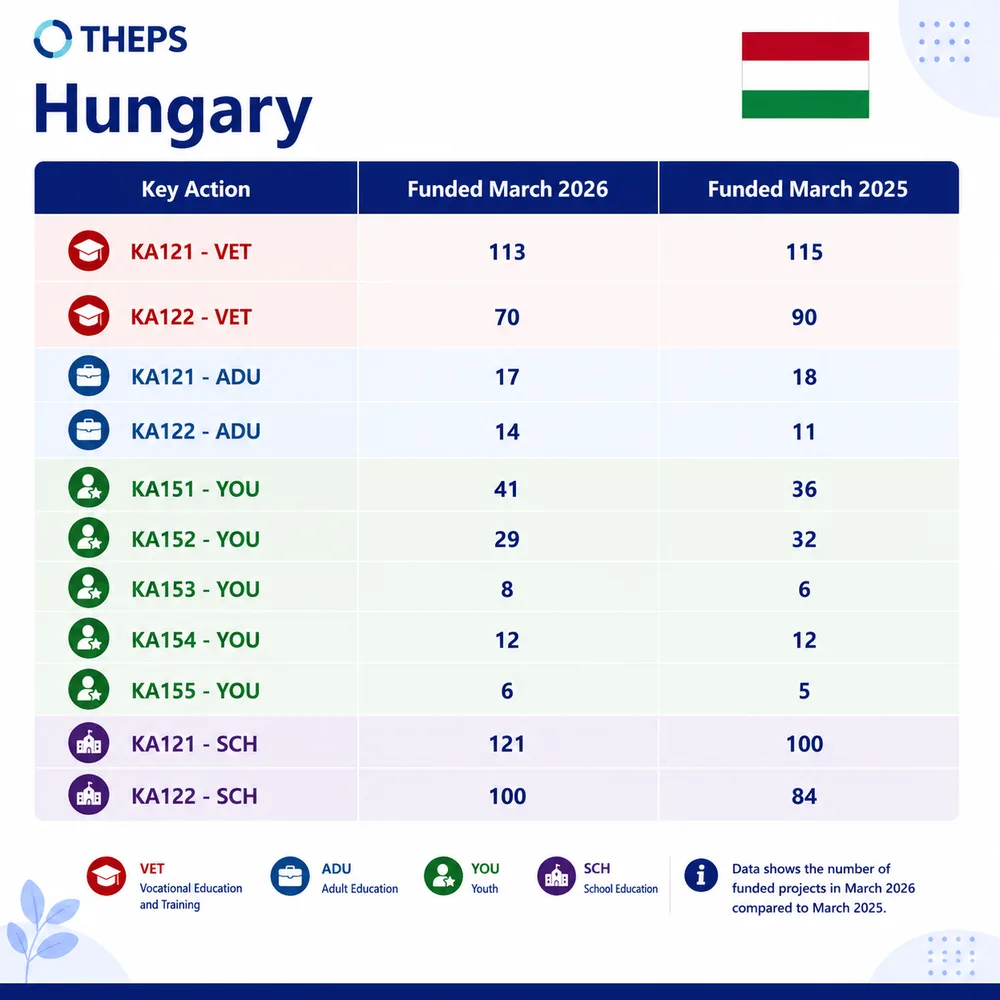
Overall, Hungary's results suggest a shift rather than a slowdown. Although VET funded fewer projects than last year, stronger performances in School Education and several Youth actions helped balance the picture, indicating continued investment in educational mobility across multiple sectors.
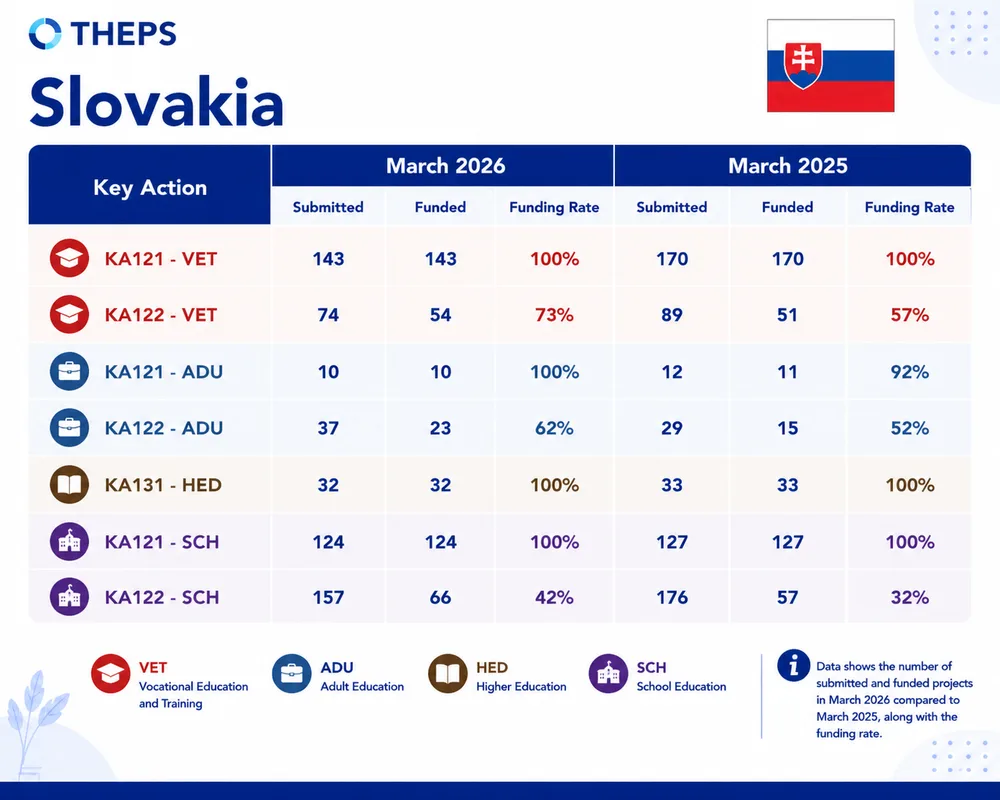
Overall, Slovakia shows an NA that combines high approval rates with stable demand. While the total number of submissions declined slightly in several actions, applicants generally enjoyed an even better chance of success in 2026 than in the previous year.
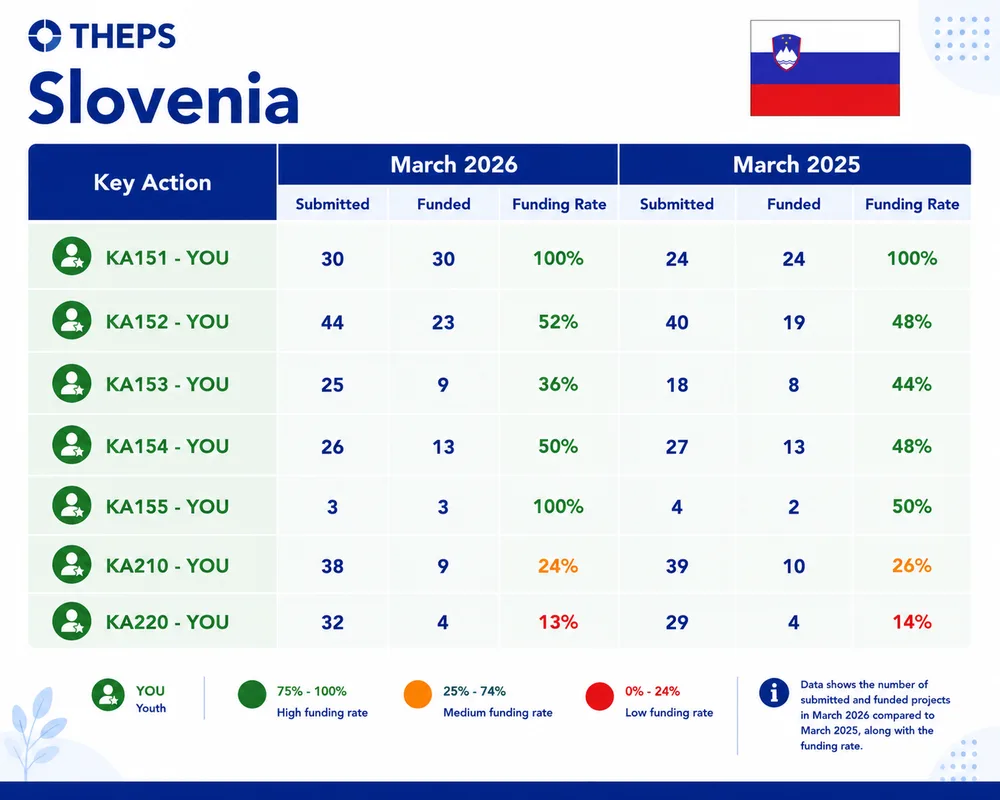
Slovenia is doing well in mobility, but cooperation partnerships are still where dreams go to meet the budget ceiling.
What the Future Holds
We’ll bring you more comprehensive issues, more results, more tips & tricks, and more funding opportunities. Stay tuned. And do read the older issues if you have missed them!